

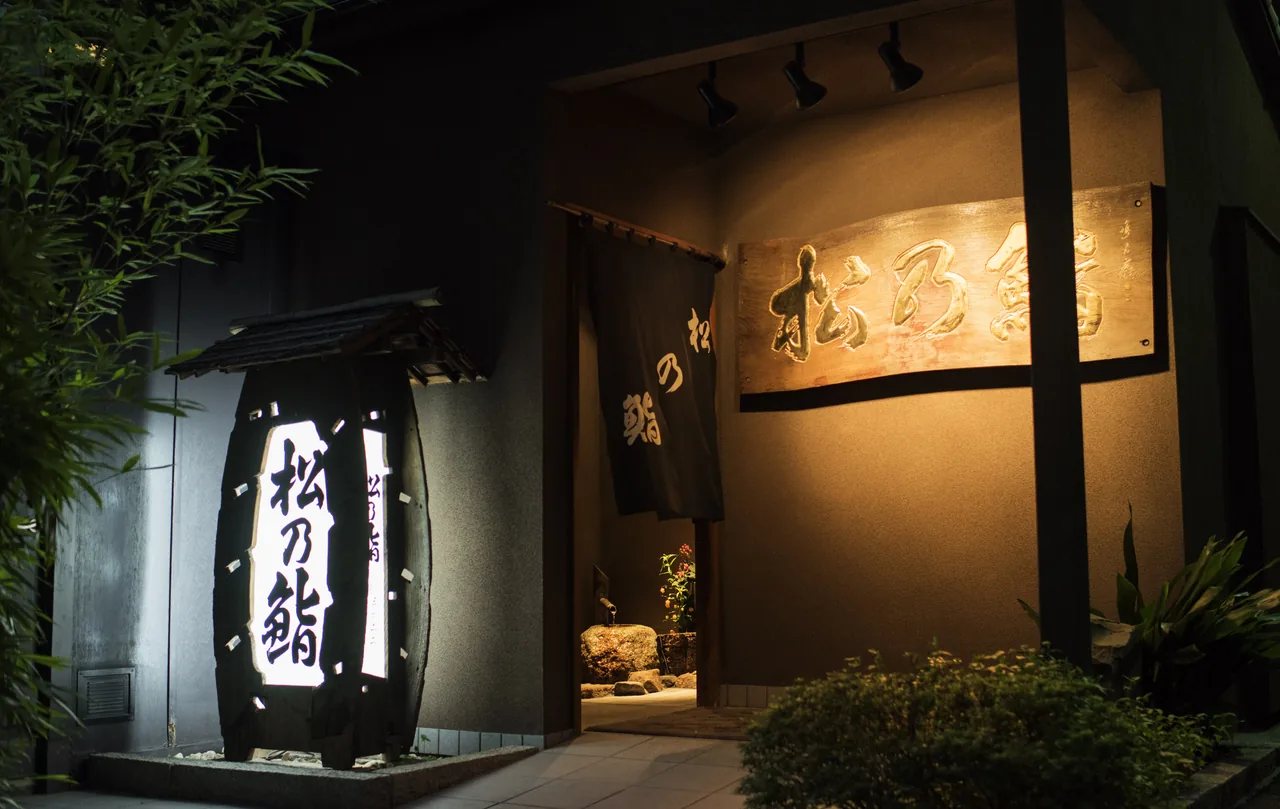
Matsunozushi's Philosophy
The third-generation owner, who has upheld the family tradition for half a century, and his son, Yoshi Tezuka, the fourth-generation owner who gained experience overseas,
stand behind the counter together, sharing Japanese culture and hospitality through sushi.
We have fostered an "open sushi culture" that is in line with the times, including presentations in English, vegetarian, kosher, and halal options, and consideration for sustainable marine resources.
Each piece of sushi embodies respect for the source of the ingredients, gratitude for nature, and the passion of the craftsman.
Matsunozushi will continue to expand the possibilities of sushi culture, guided by both "unchanging tradition" and "new challenges."
A Century of History
Matsunozushi was founded in 1910 (Meiji 43) as a street stall sushi shop in Shiba Shinmei, Tokyo (near present-day Hamamatsucho).
The second generation owner honed his skills in Kagurazaka, a district where high-class restaurant culture flourished, and in 1936 (Showa 11), he opened a shop in Omori Kaigan, a district rich in food culture. At that time, Omori was blessed with fresh seafood such as seaweed, gizzard shad, and ark shells, and was also a bustling geisha district. Matsunozushi established refined Edomae sushi in that area and developed together with the local culture.
After being completely destroyed by fire in 1989, the third generation rebuilt the restaurant.
They renovated the 80-year-old wooden Japanese house that had been the home of their grandparents, transforming it into a sukiya-style building with a courtyard and a separate tatami room. The space leading to the back through the alley and the tatami room once used for dance performances still retain the atmosphere reminiscent of the old-fashioned restaurant culture.
Even today, more than 100 seaweed wholesalers are clustered in the surrounding area, and the memory of a land once abundant with the bounty of the sea essential for sushi lives on.
Every piece of tableware and interior decoration tells a story, and Matsunozushi, along with its hundred-year history, quietly carries on the art of Edomae sushi.